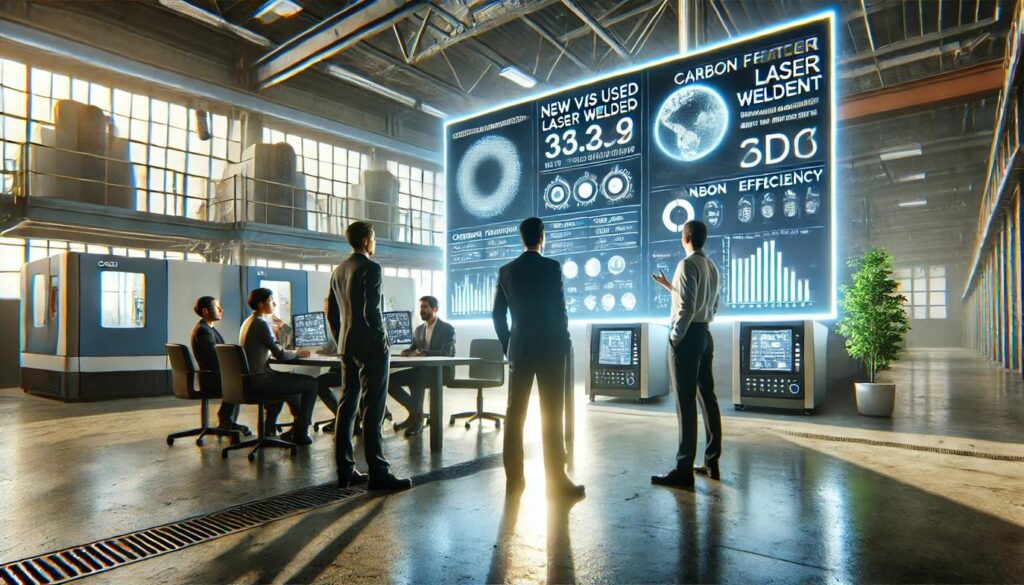
Investing in industrial equipment requires balancing cost and performance with a growing factor: environmental impact. Every laser welder for sale, whether new or used, carries a measurable footprint across its life cycle, from material extraction to operation and disposal.
New machines deliver higher energy efficiency and technological advancements, but they require resource-intensive manufacturing and global logistics. Meanwhile, used or remanufactured machines extend the lifespan of existing products and reduce waste but may lag in efficiency or reliability. Understanding this trade-off through a life-cycle assessment (LCA) lens helps you make decisions that balance productivity with sustainability.
Understanding The Full Environmental Lifecycle
LCA Phases & Impact Categories
An LCA evaluates a product’s total environmental footprint from cradle to grave across several key phases:
- Raw Material Extraction: This includes the mining and refining of all metals, plastics, and electronic components.
- Manufacturing: This covers the assembly, fabrication, and total energy consumption during the production process.
- Transport: This phase accounts for all emissions generated from shipping and logistics.
- Use & Maintenance: This involves the operational energy, consumption of spare parts, and service requirements over the machine’s life.
- End-of-Life: This final phase addresses whether the machine is recycled, reused, or sent to a landfill.
Key impact metrics include:
- Carbon emissions (CO₂e)
- Energy consumption
- Resource depletion
- Air and water pollution
- Waste generation
Modeling Reuse, Repair & Remanufacture
Assessing used or remanufactured machines is complex, but lifecycle assessments often credit these products for offsetting the environmental cost of new production. This means extending a machine’s lifespan can cut total lifecycle emissions as long as it remains productive and safe to operate.
The Environmental Impact of a New Laser Welder
Resource Extraction & Manufacturing Impact
Manufacturing a new laser welding system is a resource-intensive process that relies on energy-demanding supply chains. It involves large quantities of steel, aluminum, precision optics, semiconductors, and power electronics, contributing to a substantial embodied carbon footprint before the unit even leaves the factory.
Transportation & Supply Chain
Shipping raw materials and finished machines across global routes adds to emissions. Although transport typically accounts for a smaller portion of total impact, it contributes to the machine’s overall carbon cost.
Use-Phase Efficiency & Longevity
Engineers design newer laser welders for superior energy efficiency, lower maintenance needs, and precise output control. They often consume less power and generate less waste heat than older units. However, if the machine is underutilized (for example, running far below its designed capacity), its embodied manufacturing impact outweighs these operational gains.
End-of-Life & Recycling
At the end of its service life, a new welder can be partially recycled, recovering metals and components. But recycling is rarely 100 percent efficient, and electronic parts often end up as waste. Responsible manufacturers design with modularity and recyclability in mind to reduce this loss.
The Environmental Impact of a Used Laser Welder
Extending Product Life
Buying a used or refurbished laser welder for sale effectively extends the lifespan of existing materials. This reduces demand for new resource extraction, manufacturing, and transportation. Extending a machine’s life by even a few years can cut its cumulative carbon emissions significantly.
Lower Embodied Emissions
Because the manufacturing phase is the most carbon-intensive, skipping it through reuse lowers the total footprint dramatically. Studies of refurbished industrial and electrical machinery indicate potential carbon reductions of up to 70–80 percent compared to producing new equipment.
Challenges & Uncertainties
Used machines must be evaluated for condition, reliability, and compatibility with current processes. Worn components or outdated controls can increase maintenance energy use or downtime. If extensive repairs or retrofits are required, the environmental advantage may narrow, though it often remains positive overall.
Comparison Table: New vs. Used Laser Welders, Environmental Metrics at a Glance
| Category | New Laser Welder | Used / Remanufactured Laser Welder |
| Embodied Carbon | High – due to new materials & manufacturing | Low – avoids new production emissions |
| Operational Efficiency | Typically high | Depends on age, maintenance, retrofit quality |
| Resource Consumption | Significant raw material demand | Minimal – uses existing materials |
| Waste Generation | Moderate to high at end-of-life | Lower – delays disposal and reduces landfill |
| Lead Time & Logistics | Longer – includes build & transport | Shorter – often locally available |
| Total Environmental Impact | High upfront, potentially offset by long lifespan | Substantially lower if in good working condition |
Comparing The Embodied and Operational Emissions
Embodied vs. Operational Emissions
Embodied emissions from manufacturing and operational emissions from use represent the two primary sources of a welder’s total environmental impact. A brand-new unit might save energy in operation, but producing it emits significantly more CO₂. Conversely, reusing an older model saves the embodied emissions yet may consume slightly more power.
Break-Even & Use-Intensity Thresholds
The break-even point is when cumulative operational savings from a new machine offset its higher embodied emissions. This threshold depends on utilization: the more frequently and efficiently a new machine runs, the faster it pays back its environmental debt.
For companies with intermittent or low-volume production, a refurbished welder often provides the greener choice.
Practical Considerations & Decision Factors
Machine Condition, Age & Reliability
When inspecting a used laser welder for sale, check for structural integrity, beam alignment, and electronic stability. Always review maintenance logs, operating hours, and any retrofit history. A well-maintained older machine can outperform a neglected new one in sustainability terms.
Retrofit, Upgradeability & Efficiency
Retrofits—such as improved optics, energy-efficient laser diodes, or updated software—can extend usability and performance. This combination of reuse plus targeted modernization achieves a balance between circular economy goals and operational reliability.
Supply, Availability & Lead Times
Used equipment is typically available sooner, cutting waiting periods and minimizing the environmental impact of long-distance shipping. Local sourcing further reduces transport-related emissions.
Policy, Regulation & Incentives
Many regions now promote circular procurement—favoring refurbished machinery over new purchases when feasible. Aligning with these frameworks can help organizations meet sustainability targets and environmental reporting requirements.
Recommendations & Best Practices
To make responsible purchasing decisions, adopt the following strategies:
- Apply LCA Principles: Always compare both new and used options using a comprehensive cradle-to-grave analysis.
- Favor Reuse with Strong Utilization: Ensure a used welder will be actively and efficiently employed to justify its continued operation and offset its prior impact.
- Select Retrofit-Ready Models: Prioritize equipment with modular designs and components that can be easily upgraded over time.
- Maintain Proactively: Implement a preventive maintenance schedule to maximize the machine’s lifespan and reduce emissions from breakdowns.
- Document Carbon Savings: Integrate the decision to reuse equipment into your corporate sustainability metrics to track and report the environmental benefits.
These practices not only support environmental goals but can also reduce costs and strengthen resilience across supply chains.
The Role of Manufacturers in Sustainability
Leading manufacturers demonstrate how sustainability and performance can align. When purchasing a new or refurbished laser welder for sale, look for companies that emphasize durability, precision, and energy efficiency. A focus on modular design with easily replaceable components reduces waste and extends machine lifespans.
By providing customers with technical expertise and lifecycle guidance, manufacturers can help businesses achieve high productivity without compromising their environmental responsibilities. This kind of partnership marks a crucial step toward building a greener and more sustainable industrial future.
Balancing Performance and Sustainability in Your Choice
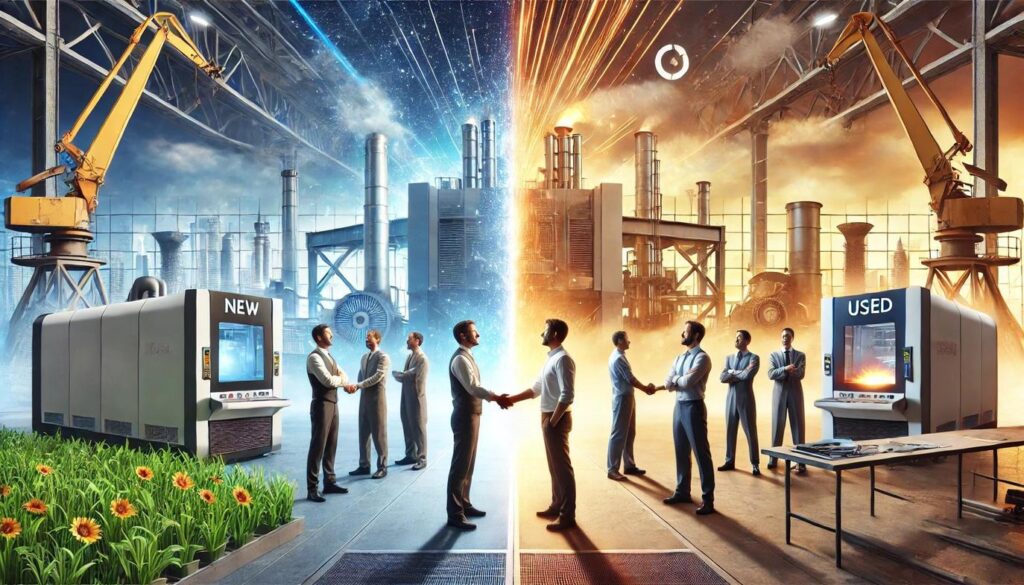
Choosing between new and used equipment is no longer just a financial decision; it’s an environmental one. A new laser welder for sale may deliver unmatched efficiency, but its production carries a heavy carbon footprint. Used or remanufactured systems, on the other hand, dramatically reduce embodied emissions and align with circular economy principles, provided they’re maintained and utilized effectively.
Ultimately, the optimal path depends on your operational needs, machine condition, and long-term sustainability goals. By evaluating total life-cycle impacts and prioritizing reuse wherever possible, you contribute to a manufacturing ecosystem that is smarter, cleaner, and more responsible.
Answering Key Environmental Questions
What is Embodied Carbon in a Laser Welder?
Embodied carbon refers to the total greenhouse gas emissions generated during the manufacturing of a product, from raw material extraction to factory production. A new laser welder has a high embodied carbon footprint, while a used machine’s footprint is significantly lower because it avoids this initial production impact.
Are Used Welders Always More Eco-Friendly?
A used welder is typically more eco-friendly due to its lower embodied emissions. However, its overall environmental advantage depends on its operational efficiency and reliability. An older, poorly maintained machine that consumes excessive energy or requires frequent repairs may have a higher lifetime impact than a new, highly efficient model.
How Does Utilization Affect Environmental Break-Even Point?
The break-even point is when a new machine’s operational energy savings have fully offset its high initial manufacturing emissions. A machine that is used frequently and at high capacity will reach this break-even point much faster, justifying its production. For low-volume or intermittent use, a refurbished model often remains the greener option.