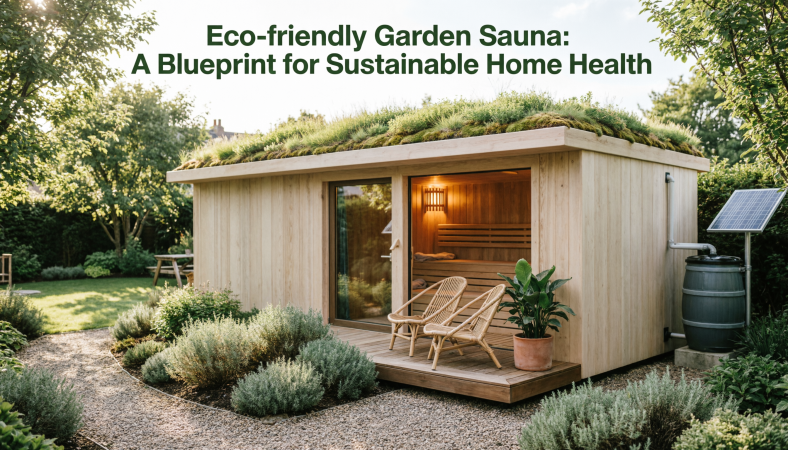
Imagine stepping into a sanctuary of warmth where every breath of cedar-scented air aligns with your commitment to the planet. As modern homeowners pivot toward regenerative lifestyles, the garden sauna has evolved from a simple luxury into a centrepiece of sustainable wellness. It represents a rare intersection of personal health and ecological stewardship, proving that high-end relaxation doesn’t have to come at the Earth’s expense.
How does one navigate the complex choices between traditional craftsmanship and modern efficiency? While the allure of a backyard spa is undeniable, the true value lies in the invisible details—the sourcing of the timber, the integrity of the insulation, and the clever management of resources. By prioritising these elements, you transform a standard outbuilding into a legacy of responsible design.
Your journey toward an eco-friendly retreat begins with intentionality. Every decision, from the foundation to the stove, influences the long-term footprint of your home. This guide explores how to integrate a garden sauna that resonates with your values, ensuring your private oasis remains as green as the landscape surrounding it.
Balancing Personal Wellness and Environmental Responsibility
Navigating the garden sauna dilemma requires a careful weighing of personal benefits against ecological costs. While the advantages are clear, the long-term impact must be managed with precision.
Consider these primary factors:
- Wellness and health: Saunas provide significant therapeutic benefits.
- Reduced dependency: Having a private facility limits travel to commercial spas.
- Longevity: High-quality installations serve homeowners for many years.
- Material extraction: The production phase involves significant resource use.
- Energy consumption: Heating remains a primary source of carbon emissions.
Striking the right balance is crucial for homeowners who genuinely care about the environment and refuse to take sustainability for granted as a marketing slogan.
Your sauna’s design hinges completely on the architectural style and footprint of your primary residence. Small or large, rustic or modern, a sauna can be the hub and heart of the house or just another room. It can be a key element in children’s upbringing or a remedy for insomnia.
Eco-conscious sauna design successfully balances technical performance with high-end aesthetics. Often, the choices of materials, heating systems, insulation methods, and construction techniques made to reduce environmental impact coincide with the creation of better saunas that offer more efficient performance and greater durability. Hence, the presence of eco-conscious features typically leads to high-quality outputs instead of compromising.
Ethical Timber Sourcing for Sustainable Garden Saunas
The timber forming your sauna’s frame represents the primary material input and a critical decision for environmental integrity.
Wood from certified sustainable forests—FSC or PEFC certification—means that the wood comes from forest management for long-term ecological viability rather than destructive harvesting. This certification is more important than the choice of species for most environmentally conscious buyers.
Using local or regional timber can significantly reduce transport-related emissions compared to imported timber, but the ecological management of production forests is more important than the distance alone.
Both British and European timbers are often suitable for sauna construction and can have a much lower transport footprint than species coming from other continents. Prioritise ecological management over traditional species selection to maximise your project’s environmental integrity.
Optimising Thermal Efficiency and Energy Performance in Eco-Saunas
Heating is by far the greatest source of environmental impact when a sauna is used; hence, it is a real green investment to buy insulation rather than just an upgrade. A well-insulated structure reaches temperature rapidly, maintains heat effectively, and slashes energy consumption during every session. Strategic efficiency upgrades generate compounding energy savings that significantly reduce your home’s carbon footprint over the building’s lifecycle.
Natural insulation materials such as wood fibre, hemp, and sheep’s wool deliver exceptional thermal performance without the environmental toll of petrochemical foams. These organic options also manage moisture fluctuations far better than synthetic alternatives, which often fail catastrophically if vapour barriers are compromised. The excellent moisture handling of natural materials contributes to prolonging the life of the building by avoiding rot and degradation resulting from moisture intrusion.
Clean Heating Solutions for Eco-Friendly Outdoor Saunas
Wood-fired heating is the most traditional way to experience a sauna, and if done right, it can be very green. Think of sustainable firewood as a reservoir of solar energy, where the carbon released during combustion is offset by the forest’s natural growth cycle. With proper design, modern wood-burning sauna stoves can be extremely efficient, providing maximum heat while consuming minimum fuel.
The environmental validity of wood heating depends entirely on the provenance of your fuel. Sourcing locally ensures the carbon cycle remains tight and manageable.
You should prioritise wood from:
- Sustainable forest management programmes.
- Local coppiced woodlands.
- Timber industry waste streams.
Avoid timber from unverified sources or long-distance transit, as these choices negate the ecological benefits of wood-fired heating.
Sustainable Water Cycles and Greywater Systems
Manage your sauna’s water consumption carefully; otherwise, inefficient drainage threatens the sustainability of your entire project. One effective way to eliminate water wastage is through low-flow showerheads. These fixtures disperse water in a way that provides a full-pressure sensation while significantly reducing actual consumption. Most modern high-tech shower units now feature these conservation properties as standard.
Outdoor saunas naturally integrate with your garden, providing a unique opportunity for immediate greywater reclamation. Greywater irrigation through sauna showers is the quickest and most effective means of environmental conservation in the vicinity.
Garden water is a precious resource; therefore, simple shower water collection and filtering systems are welcome since they reuse a resource that would otherwise go down the drainage. The small amount of soap present in the shower greywater does not prevent its use for decorative plants or most edible crops, provided suitable biodegradable products are used.
Modular Construction Methods and Embodied Energy Benefits
The installation of garden saunas can be very environmentally friendly depending on the construction methods used. A factory-made prefab unit, for example, results in less wastage since everything is pre-measured and computer-supported cutting is more accurate. The fact that raw materials are better utilised allows factory-made units to be more sustainable than site-built ones, which generate more wastage. Manufacturing precision often outweighs the carbon costs associated with transporting factory-built modules to your site.
A modular design allows for future disassembly and relocation, preserving the building’s embodied energy even if you change residences. By using mechanical fasteners instead of chemical adhesives, you ensure the structure can be moved when properties change hands. Being relocatable means embodied energy and materials are used for multiple sites during their whole life.
Local construction using regional suppliers and tradespeople reduces transport impacts while supporting local economies. Supporting regional craftsmanship keeps wealth within your community and ensures your investment doesn’t rely on opaque, long-distance supply chains. Specialists like edenhut focus specifically on outdoor sauna design, bringing expertise that avoids the costly mistakes and retrofits that less experienced builders often require.
Designing for Decades: The Longevity and Durability Strategy
True sustainability manifests in a sauna built to last decades, outliving the short cycles of lower-quality alternatives. The environmental benefits from design and material choices resulting in a long service life are so great that they can be compared to hundreds of incremental improvements elsewhere. A sauna with a forty-year lifespan effectively halves its annual environmental footprint compared to lower-quality units that require replacement every two decades.
Weather resistance provides ecological benefits by removing the need for harsh chemical treatments. Strategic water drainage and the selection of decay-resistant timbers ensure the building’s integrity remains intact without the periodic reapplication of toxic preservatives.
Cultivating a Legacy of Sustainable Relaxation
Successful sauna integration requires a shift from short-term convenience to generational thinking. When you treat sustainability as a core architectural requirement rather than a secondary feature, the results manifest in superior thermal performance and reduced operational costs.
The most rewarding projects are those where the homeowner feels a deep connection to the materials and processes that created their retreat. You aren’t just installing a heater in a box; you are curating a lifecycle of wellness that respects the natural world.
Invest in quality today to safeguard the environment for the next fifty years. Durable, locally sourced materials transform your sauna into a permanent, high-performance node within your home’s ecological network. As you settle into the heat, you can rest easy knowing your sanctuary supports both your health and the health of the planet.
Frequently Asked Questions About Eco-Sauna Design
What is the most sustainable way to heat a sauna?
High-efficiency, modern wood-burning stoves using locally sourced, seasoned timber offer a carbon-neutral heating cycle. Alternatively, electric heaters powered by renewable energy provide a clean, convenient solution for urban settings.
Which wood species are best for sustainable saunas?
Look for FSC or PEFC-certified timbers like Western Red Cedar, Thermowood, or local Alder. These choices ensure the wood originates from responsibly managed forests that prioritise biodiversity.
How do I reuse greywater from my sauna shower?
You can install a simple filtration and collection system to redirect shower water for garden irrigation. Using biodegradable, plant-based soaps ensures the water is safe for your decorative landscape.
Can natural insulation handle sauna humidity?
Yes, materials like sheep’s wool and hemp fibre naturally regulate moisture and offer excellent thermal resistance. When paired with a proper vapour barrier, they protect the structure from rot more effectively than synthetic foams.
Why is modular sauna construction more eco-friendly?
Factory-built units reduce material waste through precision cutting and allow for future relocation. This flexibility ensures the building’s embodied energy is preserved even if you move homes.