
Plastic mulch revolutionized farming by boosting yields and suppressing weeds, yet the environmental toll is mounting. Traditional polyethylene sheets often fragment into persistent microplastics, creating soil health issues and costly cleanup burdens for growers. As the industry seeks sustainable alternatives, the demand for soil-biodegradable agricultural plastic is reshaping how farms manage crop cycles and waste.
General audiences have already accessed a news summary of the findings highlighting a promising solution: a cellulose acetate mulch film infused with citronella oil pesticide. In recent trials, this active mulch technology significantly reduced silverleaf whitefly egg counts compared to standard plastics. This innovation offers a dual-benefit approach, reducing reliance on synthetic sprays while eliminating plastic removal costs.
Material tunability defines the core advantage of this innovation. Engineers can adjust the degradation rate of cellulose acetate mulch to match specific crop seasons, ensuring the film breaks down effectively after harvest. This capability supports integrated pest management strategies and transforms agricultural plastic from a long-term pollutant into a temporary, functional tool for modern sustainable farming.
The New Biodegradable Mulch Film
- What is it: A soil-biodegradable cellulose acetate mulch film infused with citronella oil that deters whiteflies in lab tests while keeping mechanical strength.
- Why it matters: Polyethylene mulch boosts yields but leaves persistent fragments that become microplastics and strain removal budgets, which is why growers increasingly seek certified soil-biodegradable options.
- Key results: About six eggs per plant after seven days on citronella film versus thirty-plus on polyethylene or no mulch, with a measurable moisture retention trade-off relative to polyethylene.
- Design insight: Cellulose acetate’s degree of substitution can be tuned so the film lasts through a crop’s season and then breaks down under soil conditions.
- Practical note: Costs are often higher upfront for biodegradable films, but the lack of end-of-season removal and hauling can narrow the gap in many operations.
Challenges of Polyethylene Mulch: Soil Health and Microplastic Pollution
Polyethylene mulch earned its place by delivering reliable agronomic benefits. Post-harvest cleanup reveals the primary disadvantage when films are dirty, torn, and costly to remove from rows. Even careful collection leaves residues that fragment under sun and tillage into ever-smaller pieces.
Those particles can interfere with soil structure, complicate water movement, and influence the organisms that cycle nutrients, which is why long-running field evidence on microplastics weakening soil fauna now informs many trials. Similar concerns arise as researchers document microplastics in edible crops across supply chains.
Compostability Standards and Soil-Biodegradable Certifications
Confusion over labels adds to the problem. “Compostable” packaging often needs industrial conditions and does not guarantee breakdown in real soil, which is different from soil-biodegradable films designed to mineralize under agricultural conditions. Growers can simplify decisions by looking for recognized standards that test biodegradation in soil, ecotoxicity, and mechanical performance. It is equally important to distinguish those requirements from the rules that govern industrial composting programs, as clarified in a plain-language explanation of how biodegradable plastics break down in compost that separates compostable conditions from soil performance.
Plastic pollution extends far beyond individual fields. Plastic particles spread through windblown dust, irrigation return flows, and downstream sediments, so even modest annual inputs can accumulate over time. For a systems view, recent reporting on planet-scale plastic accumulation traces how particles move through air and water while highlighting the need for source reduction alongside capture technologies.
Why Biodegradable Labels Are Confusing
“Biodegradable” is an umbrella term used in marketing that covers very different behaviors. Soil-biodegradable mulch must pass tests that measure mineralization in soil plus ecotoxicity and composition limits, whereas compostable utensils might only be verified for high-temperature composting. When growers treat those categories as equivalent, they risk buying a product that performs well in a compost facility but lingers in soil. Ongoing work on microplastic capture by biofilms underscores the value of preventing new fragments at the source.

Innovating Agriculture: Citronella-Infused Soil-Biodegradable Mulch Film
Researchers tested a cellulose acetate film enhanced with citronella oil and compared it with conventional polyethylene and bare soil under the pressure of silverleaf whitefly. After seven days, the citronella film averaged about six eggs per plant, while polyethylene and uncovered controls were in the thirty-plus range. The film retained strength and flexibility despite the botanical addition. Lab trials indicated lower moisture retention for the citronella-infused film compared to polyethylene, a factor that matters critically for water-limited regions.
This finding suggests a need for irrigation tuning or film thickness and color adjustments in future trials. The study, published in ACS Agricultural Science & Technology, details the assay and material behavior so peers can review methods alongside results.
How Citronella Repels Whiteflies
Citronella oil contains terpenoid compounds that pests detect and avoid at low concentrations. In open fields, essential oils dissipate quickly, which is why sprays often need frequent reapplication. Embedding the repellent in the mulch changes the delivery context by placing the volatile compounds at the soil-plant interface where whiteflies land and lay eggs. That placement may offer steadier release than foliar sprays.
However, season-long persistence will depend on temperature, sunlight, wind, and how the polymer matrix holds and releases the active compounds. Principles of biodiversity-forward spring gardening frequently highlight citronella’s scent profile and its long history in natural pest deterrence, even though farm-scale validation still requires careful field trials.
What the Seven-Day Test Can and Cannot Tell Us
Short assays are useful for establishing a signal and ruling out obvious material failures. They do not prove season-long performance or yield gains across climates. The moisture retention penalty observed in lab settings needs follow-up under real irrigation schedules. Likewise, repellency must persist through peak pest windows without frequent reactivation.
Materials science plays a critical role here: cellulose acetate’s internal configuration can be tuned so that a film lasts for the intended season and then degrades rather than persisting in soil, which is a very different end-of-life path than polyethylene. Research on microbes that devour plastic pollution offers a useful backdrop for understanding why soil-biodegradable pathways are promising even as standards continue to evolve.
Where this Fits in Sustainable Farming
This technology offers a two-for-one improvement: reducing plastic residues while lowering the need for synthetic pesticides. In practice, adoption will hinge on costs, the consistency of repellency across weeks rather than days, and whether growers can dial in irrigation to offset the lower moisture retention. If those pieces align, biodegradable active mulches could become a platform for crop-specific formulations that match season length, pest pressure, and local climate instead of forcing a single material to serve every field.
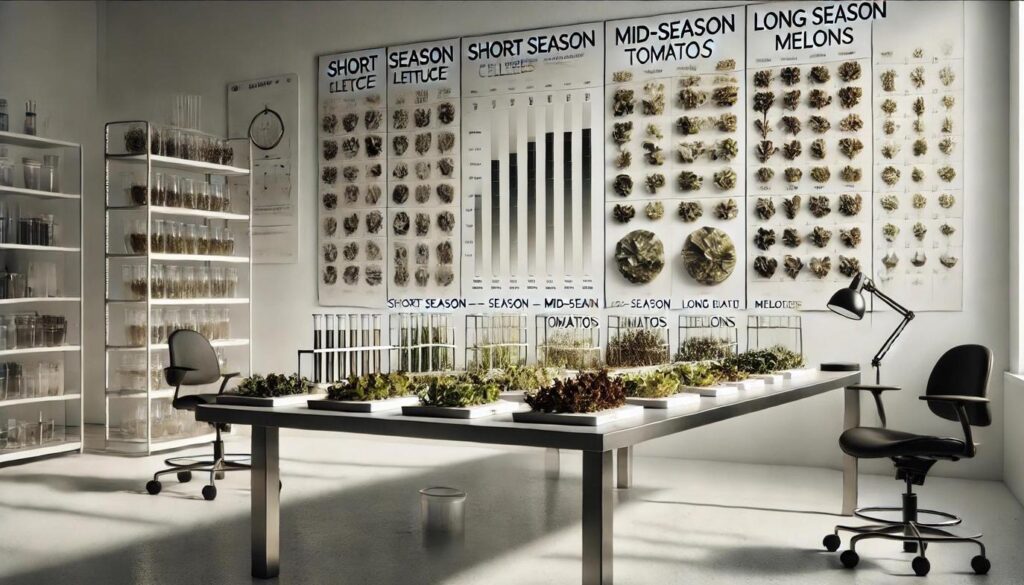
Tunable Biodegradation: Matching Cellulose Acetate Design to Crop Seasons
Engineers can tailor cellulose acetate so a mulch lasts roughly as long as the crop needs, then breaks down under soil conditions. Engineers primarily adjust the degree of substitution, which refers to how many hydroxyl groups on the cellulose backbone are replaced with acetyl groups. A higher substitution level generally slows biodegradation, while partial deacetylation can accelerate it. In practical terms, formulation choices set a window of useful life that can be aligned to early-season strawberries, midseason vegetables, or longer specialty crops.
Cellulose Acetate 101: Degree of Substitution and Persistence
Cellulose acetate behaves differently from commodity polyethylene because microbes can eventually use the deacetylated fragments as carbon sources. Material scientists use the degree of substitution and crystallinity to balance two competing goals. Effective mulch must provide a sufficient barrier to suppress weeds and stabilize soil temperatures, yet remain susceptible enough to mineralize in a reasonable time after till-in.
Across agriculture more broadly, growers are beginning to evaluate biodegradable polymer options for agricultural plastics as part of a shift away from conventional materials. Thicker films or higher crystallinity may extend durability but can push degradation further into the future, so the art is choosing a profile that fits climate and crop rather than a one-size-fits-all sheet.
Release and Moisture: How Film Design Affects Microclimate
Mulch color, thickness, and any embedded additives influence soil temperature and water retention. The citronella-infused film showed lower moisture retention than polyethylene in lab work, which signals two actions for field trials.
- First, evaluate irrigation schedules so plants do not experience unnecessary stress.
- Second, test film thickness and color for the target region.
- Darker tones can warm and dry soil faster, while lighter tones can moderate heat and reduce evaporation.
- Where water is tight, strategies like recirculating irrigation and tailwater recovery can stabilize supply as materials are tuned.
Certification and Field Reality
Standards for soil-biodegradable mulch verify biodegradation in soil along with ecotoxicity and mechanical performance. Growers looking for credible verification can use the EN 17033 standard for soil-biodegradable mulch films as a reference for biodegradation, ecotoxicity, and film performance. Those tests are necessary, but fields are not controlled laboratories. Soil texture, temperature, moisture, and microbial activity vary widely between farms and seasons. Growers should treat certification as a baseline and plan a small-area pilot to verify that the chosen formulation degrades on schedule in their conditions.
What Growers can Pilot
Start with a limited plot next to current practice. Record soil moisture and temperature, and track weed pressure and any signs of pest activity at regular intervals. At harvest, till in the biodegradable film following manufacturer guidance, then assess residue the following spring. That notebook will be more useful than any brochure because it captures how the material behaves in your soil and climate.
Enhancing Integrated Pest Management: Shifting from Sprays to Active Substrates
Integrated pest management aims to reduce reliance on broad-spectrum chemicals by combining crop rotation, resistant varieties, beneficial insects, and targeted controls. An active mulch adds another layer by placing botanical repellents at the soil surface where many pests land and reproduce. The citronella-infused film demonstrated a measurable reduction in whitefly egg laying in short trials, which supports the biological plausibility of this approach.
Release Kinetics and Field Longevity
Essential oils volatilize, so the key to season-long benefit is how the polymer holds and releases the active compounds. Temperature, solar radiation, and wind all influence the rate at which the scent plume dissipates. Future fieldwork should measure concentrations near the canopy over time while correlating those measurements with pest counts. If release declines before peak pressure, formulators can adjust loading or matrix structure so deterrence lasts through the critical window.
Regulatory and Food-Crop Considerations
Botanical repellents are often regulated differently from synthetic pesticides. Labels and allowed uses can vary by jurisdiction, and rules for food crops can be stricter than for ornamentals. Growers should confirm federal, state, and local requirements before adoption and keep application records that document product identity, plot, and timing in case a buyer requests verification.
Pairing with Other IPM Tools
Active mulches work best inside a broader IPM plan. Effective IPM requires a stack of modest effects so the repellent does not carry the full load. Key supporting tools include:
- Sticky cards: Monitor and trap adult pests.
- Biological controls: Introduce natural predators to keep populations down.
- Sanitation: Remove crop residues to limit breeding sites.
- Crop borders and reflective mulches: Provide physical or visual barriers where appropriate.
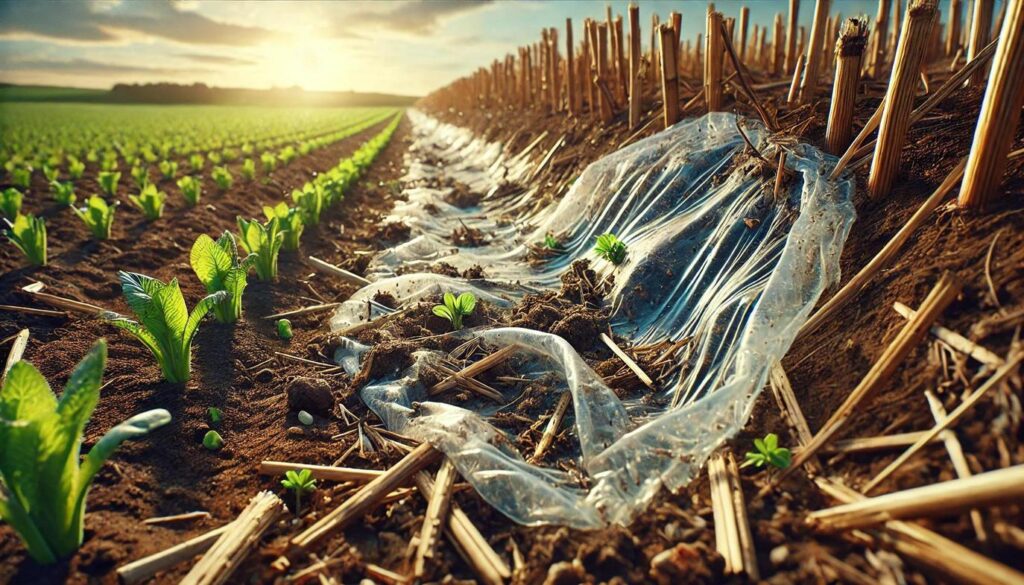
Advancing Sustainable Agriculture with Active Biodegradable Mulch
Adopting citronella-infused biodegradable mulch film represents a significant leap forward for sustainable agriculture, effectively addressing two critical challenges: plastic accumulation and chemical dependency. By embedding botanical repellents directly into the substrate, growers can disrupt pest cycles like that of the silverleaf whitefly while eliminating the labor-intensive removal of dirty plastic sheets. This dual-action approach aligns with modern Integrated Pest Management (IPM) goals, offering a scalable path toward cleaner soil and reduced synthetic inputs.
Validating season-scale performance across diverse climates remains the final hurdle for widespread adoption. As formulation technologies evolve, the ability to tune biodegradation rates to match specific crop cycles will allow farmers to customize these tools for their unique growing conditions. With continued innovation in active mulch technology, the agricultural sector can move closer to a zero-waste future, drawing on a pipeline of plant-sugar and microalgae bioplastics and other nature-derived biodegradable plastic solutions that expand feedstock and performance choices.
Frequently Asked Questions About Active Mulch Technology
Does soil-biodegradable agricultural plastic fully break down?
Yes, certified soil-biodegradable options are engineered to mineralize completely under field conditions, though breakdown rates depend on local soil temperature and microbial activity.
How does citronella oil pesticide work in mulch?
Citronella oil releases natural terpenoids that repel pests like silverleaf whiteflies at the soil level, reducing the need for foliar sprays.
Is biodegradable mulch film strong enough for machinery?
Tests confirm that cellulose acetate films retain sufficient tensile strength and flexibility for standard mechanical laying equipment.
What is the moisture retention trade-off?
Biodegradable films may retain slightly less moisture than polyethylene, requiring growers to adjust irrigation schedules for optimal crop health.
Can active mulch technology replace all pesticides?
No, it is designed as a tool within Integrated Pest Management (IPM) to lower pest pressure, not as a standalone replacement for all controls. Initial seven-day trials demonstrate encouraging results for whitefly deterrence, but season-long field validation is still required.