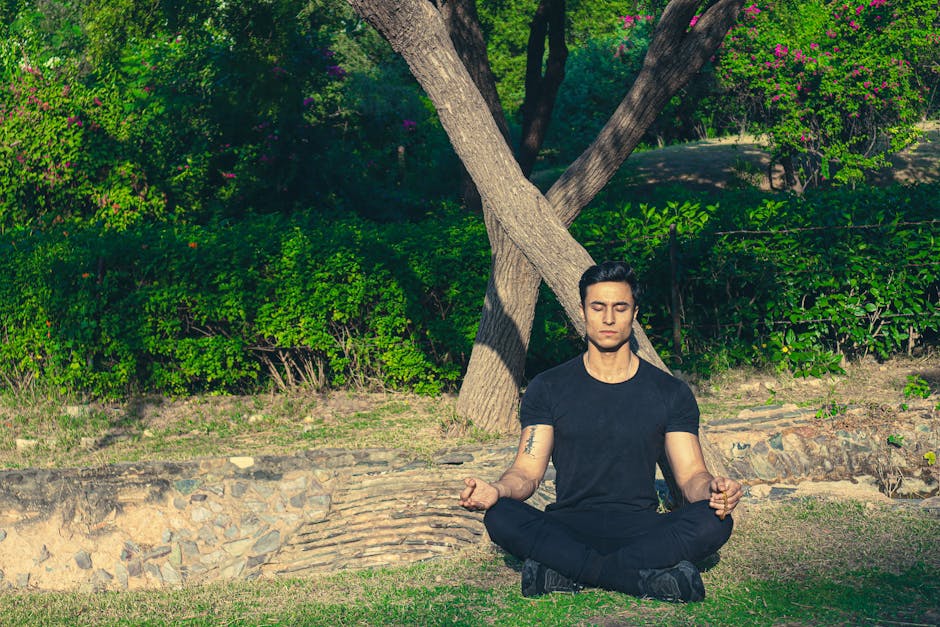
I have spent the better part of a decade sitting on various cushions, chairs, and occasionally the floor of a crowded airport, trying to find some semblance of internal quiet. It is a messy process. When I started, I thought I needed a silent cave in the Himalayas. I was wrong. What I actually needed was a decent guide to stop me from just ruminating on my to-do list for twenty minutes. Over the years, I have cycled through dozens of apps, read the heavy-hitting books, and even strapped biofeedback sensors to my forehead. Some were transformative; others were just expensive white noise. Finding the best meditation guides is not about finding the most famous guru, but finding the voice or method that actually gets you to sit down tomorrow morning.
Best Meditation Apps for Consistent Daily Practice 2024
Apps are the entry point for most of us. They turn a nebulous concept like “mindfulness” into a button you press on your phone. In my experience, the effectiveness of an app usually comes down to the quality of the teacher’s voice and how much friction there is between opening your phone and starting a session. If the interface is too busy, I find myself checking my email instead of breathing.
Headspace (Approx. $69.99/year)
Headspace is the gold standard for a reason. I used this app exclusively for three years. The primary guide is Andy Puddicombe, a former Buddhist monk with a voice that feels like a warm blanket. It is incredibly structured. If you are the type of person who likes checking boxes and following a curriculum, this is your best bet. Their “Basics” course is the most logical progression for a beginner I have ever seen.
- Pro: High-quality animation and very clear, jargon-free instructions.
- Con: The gamification (streaks and levels) can sometimes make meditation feel like another chore to complete.
Calm (Approx. $69.99/year)
Calm takes a different approach. While Headspace feels like a school, Calm feels like a spa. They lean heavily into “Sleep Stories” and celebrity guest appearances. I personally found their “Daily Calm” sessions—led by Tamara Levitt—to be excellent because they tie a specific mindfulness concept to a real-world scenario every single day. It keeps the practice from feeling too abstract.
- Pro: Best-in-class nature sounds and sleep-focused content.
- Con: The user interface is a bit cluttered, which can be distracting when you are trying to wind down.
Insight Timer (Free / Premium approx. $60/year)
This is the “wild west” of meditation guides. It is a massive library of over 100,000 guided meditations from thousands of different teachers. I use this when I want something specific, like a Yoga Nidra session or a very particular chanting meditation. It is the best free option on the market, hands down. You do not need the premium version to access the bulk of the content.
- Pro: Massive variety and a completely functional free tier.
- Con: Quality control is non-existent; you have to sift through some mediocre guides to find the gems.
Top Meditation Books for Building a Mindful Foundation
Sometimes a digital voice isn’t enough. I found that reading about the mechanics of the mind helped me understand *why* I was sitting there in the first place. Books provide the philosophical scaffolding that apps often skip over. They are the guides you return to when you feel like your practice has hit a plateau.
Wherever You Go, There You Are by Jon Kabat-Zinn (Approx. $15)
If you want to understand mindfulness without the religious baggage, this is the book. Kabat-Zinn is the guy who brought mindfulness into the Western medical mainstream through Mindfulness-Based Stress Reduction (MBSR). His writing is poetic but grounded. He doesn’t promise you enlightenment; he just promises you that you might actually be present for your own life. I keep a dog-eared copy on my nightstand.
- Pro: Authoritative, scientific, and deeply compassionate.
- Con: Some readers might find the prose a bit too dense or slow-paced.
10% Happier by Dan Harris (Approx. $12)
This book changed things for me because it was written by a skeptic. Dan Harris was a news anchor who had a panic attack on live television and eventually found meditation. He approaches it from a “what is the minimum I can do to get a result” perspective. It is funny, cynical, and ultimately very convincing. It’s the guide for people who think meditation is “woo-woo” nonsense.
- Pro: Extremely relatable for high-stress professionals.
- Con: It focuses more on the narrative journey than on step-by-step instructions.
The goal of a meditation guide isn’t to clear your mind—that’s impossible. The goal is to give you a focal point so you can notice when your mind has wandered off to think about your car insurance or what you said in that meeting three years ago.
Free YouTube Meditation Guides for High Quality Sessions
You don’t need a subscription to get high-level guidance. YouTube has evolved past just being a place for cat videos; it is now a repository for some of the best meditation guides in the world. The catch, of course, is the ads. I highly recommend using a browser that blocks them or paying for Premium if you go this route, because nothing ruins a Zen moment like a loud detergent commercial.
Yoga With Adriene
While primarily a yoga channel, Adriene’s “Find What Feels Good” philosophy extends into her dedicated meditation videos. She has a way of making you feel like you aren’t failing at meditation. Her 10-minute sessions are my go-to when I’m feeling overwhelmed but don’t have the mental energy for a deep dive. She focuses heavily on the connection between the body and the breath, which is great for people who carry their stress physically.
The Honest Guys
If you like guided imagery—visualizing yourself in a forest or on a beach—these are the best guides on the platform. Their production value is incredible. They use high-quality microphones and subtle soundscapes that don’t feel cheesy. I use their “Fantasy” meditations when my anxiety is too high for a traditional breath-counting session. Sometimes you just need to imagine you’re in a cabin in the woods to calm your nervous system down.
Comparison of Guided Meditation Styles and Instructional Methods

Not all guides are teaching the same thing. I spent years confused because I was trying to do Vipassana while listening to a Metta guide. It’s like trying to learn French with a Spanish textbook. Understanding the underlying style of the guide you choose is vital for your progress. If you want to be more compassionate, a focus-based guide won’t help you as much as a heart-centered one.
| Meditation Style | Core Objective | Best For | Recommended Guide |
|---|---|---|---|
| Mindfulness (MBSR) | Non-judgmental awareness of the present. | General stress and anxiety. | Jon Kabat-Zinn / Headspace |
| Vipassana (Insight) | Deep self-observation of physical sensations. | Emotional regulation and clarity. | S.N. Goenka / Joseph Goldstein |
| Metta (Loving-Kindness) | Developing compassion for self and others. | Anger management and self-esteem. | Sharon Salzberg / Insight Timer |
| Zazen (Zen) | Strict posture and “just sitting.” | Discipline and spiritual depth. | The Zen Center / Various Books |
| Yoga Nidra | Guided relaxation into a sleep-like state. | Insomnia and deep recovery. | Ally Boothroyd (YouTube) |
Choosing a style depends on your current state. When I am feeling particularly self-critical, I ditch the mindfulness apps and go straight for a Metta guide. There is something about the structured phrases of “May I be happy, may I be well” that interrupts the internal critic better than just watching my breath ever could. Conversely, when I am scattered and can’t focus on work, a 20-minute Vipassana session is like a cold shower for my brain.
Advanced Meditation Hardware and Biofeedback Guides for Deep Work
I am a bit of a nerd, so eventually, I wanted to see the data. If you feel like you are “faking it” or you just want to know if you are actually reaching a meditative state, biofeedback guides are a fascinating—if expensive—rabbit hole. These devices act as a physical guide, giving you real-time sounds based on your brainwaves or heart rate.
Muse S Headband (Approx. $399)
The Muse S is a multi-sensor headband that tracks your brain activity (EEG), heart rate, and movement. When your mind is calm, you hear peaceful weather sounds. When your mind wanders, the weather gets stormy. It’s a literal feedback loop. I found this incredibly helpful for training my “focus muscle” because it catches the distraction before I even realize it’s happened.
- Pro: Provides objective data and excellent sleep tracking.
- Con: Very expensive, and many of the best guided sessions require an additional monthly subscription.
Core Meditation Trainer (Approx. $219)
Core is a handheld device that vibrates in sync with your breathing or the meditation guide. It’s a tactile guide. For someone like me who has a very active mind, having a physical sensation to hold onto is a huge help. It syncs with an app that tracks your “calm” and “focus” levels during the session. It’s less clinical than the Muse but more grounding.
- Pro: The vibration is a unique and effective way to anchor your attention.
- Con: The app experience is somewhat limited compared to dedicated apps like Calm or Headspace.
Selecting a Meditation Guide Based on Personal Mental Health Goals

Don’t just pick the most popular guide. Pick the one that solves your current problem. If you are struggling with sleep, a 30-minute silent Vipassana guide is going to be frustrating and counterproductive. You need a Yoga Nidra or a sleep story. If you are trying to build focus for a high-stakes job, you need a guide that emphasizes breath counting and returning to the anchor.
For Acute Anxiety and Panic
Look for guides that focus on “grounding.” These often use the 5-4-3-2-1 technique or focus heavily on the physical weight of your body in the chair. You want a guide with a low, steady voice. I find that the “Panic” SOS sessions on Headspace are remarkably effective at de-escalating a rising sense of dread. They don’t ask you to “clear your mind”; they just ask you to feel your feet on the floor.
For Improving Focus and Productivity
The best guides here are the ones that are slightly more “boring.” You want less talking and more space. The goal is to train your brain to stay with one object (usually the breath). Look for “Open Monitoring” or “Focused Attention” meditations. Ten minutes of simple breath counting, guided by a minimal voice like Sam Harris on the Waking Up app, is much more effective for work-focus than a lush, guided imagery trip to a tropical island.
Ultimately, the best meditation guide is the one you don’t argue with. If you find yourself annoyed by a teacher’s accent, or the background music makes your skin crawl, stop. Delete the app. Close the book. There are too many high-quality options available to waste time on a guide that doesn’t resonate with you. It took me three years to realize I didn’t actually like the “nature sounds” in most apps. Once I switched to silent timers with a simple bell, my practice finally stuck. Experiment aggressively until you find the voice that feels like home.