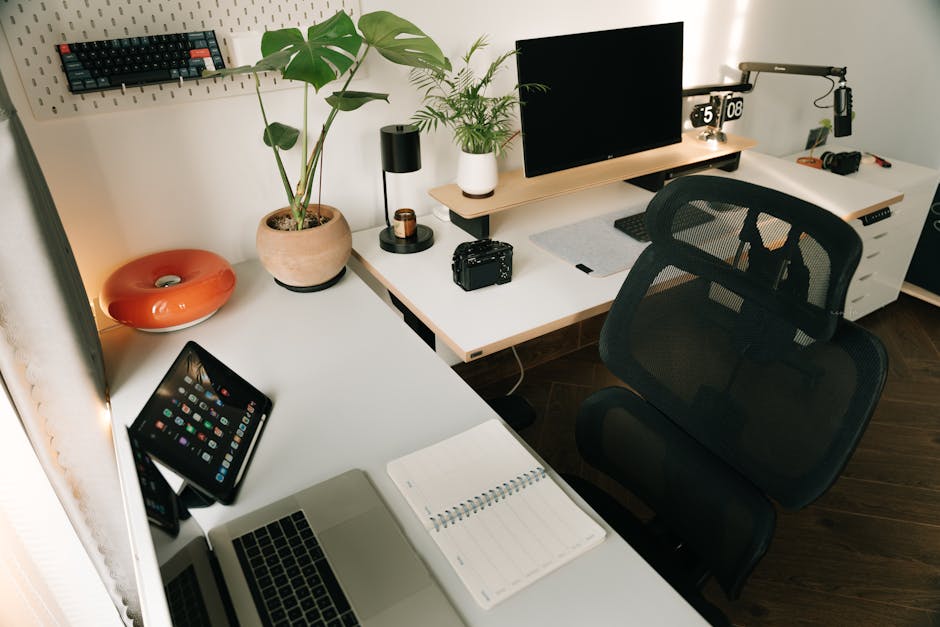
Why Standing Desk Chairs Cost $500+ (And 5 That Don’t Need To)
Most people assume a good chair for a standing desk has to cost north of $400. That’s not true. The Herman Miller Aeron runs $1,495. The Steelcase Leap V2 is $1,500. Both excellent chairs — for a traditional 29-inch desk. At counter height? You’re paying for precision engineering that wasn’t built for your setup.
Drafting and tall desk chairs have simpler mechanical requirements. A seat that adjusts to 24–33 inches. A foot ring. A mesh back that breathes. That combination exists at $100. Here’s what the market actually looks like and how to buy smart.
The Real Cost Breakdown: What $500 vs. $100 Actually Buys You
Brands like Humanscale, Steelcase, and Herman Miller charge premium prices for chairs engineered around 17–19 inch seat heights — standard desk territory. When those same companies produce “drafting stools,” they’re largely repurposing existing frame components with an extended gas cylinder. The ergonomic R&D doesn’t scale up proportionally. The price tag does.
| Price Range | What You Get | What’s Missing | Best For |
|---|---|---|---|
| Under $60 | Basic height adjustment, foam seat, minimal lumbar | Foot ring, mesh back, long-term durability | Occasional use only |
| $75–$120 | Mesh back, adjustable seat height, foot ring, swivel casters | Armrests (often), premium tilt tension control | Daily home office, art studio, study desk |
| $150–$300 | Adjustable armrests, contoured lumbar, branded mesh material | Nothing critical — diminishing returns start here | Full-time remote workers with specific fit needs |
| $400+ | PostureFit SL, 12-year warranty, showroom credibility | Value — you’re paying for brand equity and warranty coverage | Corporate offices, people who genuinely need the warranty |
For home offices and art rooms, the $75–$120 tier is where real value lives. You get every feature that affects posture and daily comfort. The extra $300 buys a logo and a longer warranty — neither of which changes how your back feels after hour three.
Why the Foot Ring Is Non-Negotiable
At counter height — 28–36 inches — your feet can’t reach the floor. That transfers your full lower-body weight onto the backs of your thighs, cutting off circulation and generating the same compressive pressure as sitting cross-legged for hours. A foot ring distributes that load correctly, bringing your knees to roughly 90 degrees and restoring blood flow. Any drafting chair without one is a barstool with ergonomic marketing printed on the box.
Armless vs. Armrests at Counter Height
At a drafting table or standing desk, armrests often create shoulder problems rather than solving them. Fixed armrests typically sit too high relative to the work surface, forcing your shoulders up and inward throughout the session. For art work, design drafting, or angled-surface writing, armless chairs keep elbows free and shoulders in a neutral, dropped position. For flat-surface typing, adjustable armrests help — but only if they actually lower to desk surface level, which most budget armrests fail to do.
Why Your Posture Collapses at Counter Height (The Actual Mechanics)
Standard desk geometry is forgiving. A 29-inch desk surface, an 18-inch chair seat, feet flat — thighs roughly parallel to the floor, spine holding a natural S-curve. Lean back or forward and the setup compensates without much effort from your core.
Counter height changes the math entirely. At a 36-inch desk with your seat at 26 inches, your hip angle opens past 90 degrees. That forward weight shift loads your lumbar vertebrae differently — the pressure distribution moves anteriorly in the discs, which is exactly the loading pattern associated with lower back fatigue over extended sessions. Your core muscles have to work harder to keep you upright without you noticing it consciously.
Without a foot ring, your legs dangle. Your thighs compress against the seat edge, restricting venous return. Within 30 minutes, you’re shifting and fidgeting looking for a position that doesn’t feel wrong. Most people respond by slouching backward — spine rounding, head drifting forward past the shoulder line. That’s the source of the neck and lower back pain that gets blamed on “sitting too much.” It’s not the sitting. It’s the wrong geometry for the height.
Three things fix it: correct seat height relative to your specific desk surface, a foot ring positioned for your leg length, and a mesh back that allows natural postural micro-adjustments instead of locking you into a fixed position. None of those require a $500 chair.
How to Calculate Your Target Seat Height Before You Buy
Measure your desk surface from the floor. Subtract 10–12 inches. That’s your target seat height. For a 36-inch standing desk at seated counter height, aim for 24–26 inches. For a 40-inch tilted drafting table, you want 28–30 inches. Write that number down before you shop. It’s the single most important spec in a drafting chair, and most product listings either bury it in a vague range or cite the “adjustment range” without clarifying the actual seat height at maximum cylinder extension. Confirm it with the seller if necessary.
Why Mesh Backs Outlast Foam in the Long Run
Foam compresses permanently within 12–18 months of daily use. A chair that feels supportive in the store becomes a dense, flat slab by the time you’ve gotten your money’s worth. Mesh maintains shape and tension across years of use and allows the airflow that prevents the heat buildup making long work sessions miserable. The Steelcase Gesture uses a LiveBack flexing system that mimics spinal movement. Quality mesh at the $100 price point uses tension-adjustable weave that accomplishes similar functional goals without the $1,400 price tag.
5 Specs That Actually Predict a Good Drafting Chair
Ignore the marketing copy. Look at these numbers:
- Seat height range: Must include your target height (desk surface minus 10–12 inches). Standard drafting cylinders max at 26–28 inches. High-cylinder variants reach 30–33 inches for taller setups. Always confirm the maximum, not just the stated range — some chairs advertise a “drafting height” range that tops out at 26 inches while your desk is 38 inches.
- Foot ring presence and placement: A fixed foot ring is acceptable if it sits at the right height for your leg length. Adjustable is better. The ring should allow your feet to rest flat with knees at 90 degrees when your seat is at working height — not perched on tiptoe or hanging at an uncomfortable angle.
- Mesh back with adjustable tension: Not memory foam, not padded vinyl. Tension adjustment — the ability to set how much resistance the back provides when you lean — allows you to match the chair to your body weight and posture preferences. Without it, you’re stuck with whatever the factory decided fits everyone.
- Caster type for your floor: Soft polyurethane casters on hardwood floors. Hard casters on carpet. Most chairs ship with hard casters by default. If you’re on hardwood, buy a replacement set of soft casters — they run $10–$15 for five and prevent scratches that will eventually annoy you.
- Weight capacity: Most chairs in this price tier rate to 250 lbs. The limiting factor is the gas cylinder and base weld quality. If you’re at or above that limit, confirm the rating before purchasing. It’s in the fine print and worth five seconds to check.
Measure your desk before clicking buy. Half the one-star reviews on every drafting chair on Amazon come from buyers who didn’t verify that their target seat height falls within the chair’s actual adjustment range. That’s a return shipment, a restocking fee, and a week without a chair — preventable with a tape measure.
One more thing: “ergonomic” is not a regulated term. Any product can print it on the box with zero verification required. The five specs above tell you whether the engineering actually supports healthy sitting. The marketing copy tells you nothing.
Does Lumbar Support Matter as Much at Counter Height?
Less than most people think. The open hip angle (above 90 degrees) at counter height naturally reduces spinal compression at the lumbar region compared to closed-hip standard seating. What matters more at this height is seat depth — 16–18 inches prevents the front edge of the seat from pressing into the back of the knees — and forward tilt capability for tasks where you’re leaning in close, like illustration, fine assembly, or detailed drafting work.
Best Drafting Chairs for Home Offices and Art Rooms Right Now
Real picks. Real prices. No filler entries to pad the list.
Set Your Desk Height Before Testing Any Chair
Before touching a chair adjustment, confirm your desk is at the right height for your task. For typing, your desk surface should sit at elbow height when standing. For drawing or drafting, slightly lower — wrist height — keeps your shoulder from internally rotating upward. Getting this wrong means no chair adjustment in the world will make your posture comfortable, regardless of what the chair costs.
Primy Tall Drafting Desk Chair (Black PR777-Z) — $95.99
The Primy armless tall drafting chair is the correct answer for most home office and art room setups. 4.6 stars across 849 verified reviews reflects consistent product performance — not a spike from a discount promotion week. The armless design is intentional and smart for counter-height work: no shoulder elevation from fixed armrests, full freedom of motion for sketching or angled writing tasks, and no armrest bulk interfering with desk drawer access.
The mesh back handles airflow across sessions longer than two hours without the heat buildup foam creates. The foot ring is positioned correctly for most counter-height standing desks. Rolling casters move cleanly on both hardwood and low-pile carpet. At $95.99, this chair competes with options priced at $150–$200 and matches them on every spec that affects how your back feels by end of day.
Clear limitation: if you need armrests for heavy keyboard use at a flat surface, look elsewhere. For art, design work, standing desk setups, or home studio use — this is the pick without hesitation.
Tip: Anti-Fatigue Mats Are Worth It If You Actually Stand
If you alternate between sitting and standing throughout the workday, an anti-fatigue mat for your standing position is a genuine upgrade. The Topo by Ergodriven ($99) is the most studied option — its terrain shape encourages the small weight-shifting movements that reduce leg fatigue by 40–60% compared to standing on a flat mat. The WellnessMats Original ($129–$159) runs thicker and completely flat, better if you want something flush to the floor. Either option meaningfully reduces the fatigue that causes most people to abandon standing and sit the rest of the afternoon.
Primy Kids Desk Chair (Teal PR777) — $75.99
For children ages 4–12 at a study desk or school table, the Primy kids swivel chair in teal is sized correctly where most children’s chairs cut corners. Height-adjustable mechanism, mesh back, rolling casters — same functional spec set as the adult version, scaled to smaller frames. The adjustment range matters here: a standard kids’ desk runs 24–26 inches, and this chair covers that with growing room built in, which at $75.99 means you’re not replacing it every school year.
The teal finish works in a bedroom or home school setup without being loud. Quality consistency is clear: 4.6/5 across the same review volume as the adult version of the same product line. Check your child’s desk height against the chair’s seat adjustment range before ordering — same five-second rule that applies to every drafting chair purchase.
Tip: Fix the Chair Height, Then Leave It Alone
An adjustable chair only helps if it’s set correctly. When a new chair arrives, adjust it before the first use. For kids, seat height is correct when feet rest flat on the floor with knees at 90 degrees. Mark the lever position with a small piece of tape once you’ve found it. Revisit the fit every six months as they grow — kids in the 4–12 range change quickly enough that a correctly fitted chair in September may need raising by spring.
The One Setup Error That Cancels Every Ergonomic Feature
Wrong desk-to-chair ratio. That’s it. That’s the whole list.
A $200 chair at the wrong height creates the same spinal load as a $40 stool. A $95 drafting chair set correctly — seat at desk-height-minus-10 to 12 inches, foot ring supporting neutral knee position, back tension adjusted to match your natural resting posture — supports the spine as well as chairs priced three times higher. The geometry is the product. The chair is just the frame that holds the geometry in place.
For counter-height and standing desk setups, the Primy tall drafting chair at $95.99 handles the use case without budget bloat. For children’s study setups, the Primy kids version at $75.99 scales correctly and adjusts across the years that matter most for developing postural habits. Buy the one that fits your desk height and stop second-guessing the price point.